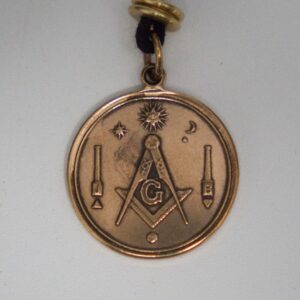
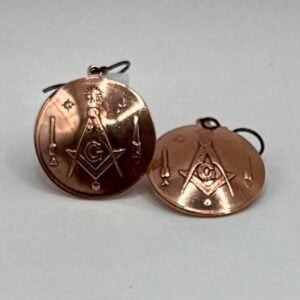
Among the most recognizable symbols worldwide, the Masonic compass and square, with the letter “G” between them, represent much more than the tools of medieval stonemasons. These ancient emblems embody deep spiritual mysteries that originate through Christian mysticism, Jewish Temple traditions, alchemical wisdom, and even prehistoric ideas of divine creation. Understanding their true meaning requires exploring layers of significance that link earthly craftsmanship with celestial mysteries and human spiritual growth.
In Masonic tradition, the compass and square hold central roles during the conferring of the First, Second, and Third Degrees, placed upon the altar in increasingly complex interlocked arrangements. This progression symbolizes the candidate’s spiritual journey from darkness to light, from ignorance to wisdom, and from spiritual death to rebirth. Each degree uncovers deeper layers of meaning within these simple geometric tools.
The compass, with its ability to draw perfect circles, symbolizes the spiritual realm, the heavens, and the divine spark within humanity. The square, used to create perfect right angles and level surfaces, represents the physical world, moral integrity, and the foundation upon which spiritual understanding is built. Their union during Masonic ceremonies signifies the integration of spiritual and material existence—the divine plan unfolding through human consciousness and action.
The letter “G” that appears between the interlocked symbols carries multiple meanings in Masonic interpretation. Most commonly, it is understood to represent “God,” but it also signifies “Geometry”—the divine science through which the Grand Architect of the Universe created and continues to sustain cosmic order. This dual meaning reflects Freemasonry’s view that divine wisdom is expressed through natural law and mathematical harmony.
The symbolic significance of the compass and square goes well beyond medieval building guilds and reaches into the core of ancient Jewish Temple mysticism. Early Masonic teachings explicitly link these tools to the cherubim that decorated the Ark of the Covenant in Solomon’s Temple, asking: “What did the two cherubim on the ark of the covenant represent?” The answer reveals “The mystery of the Golden Altar.”
This connection highlights the compass and square’s role as direct descendants of the most sacred symbols in Jewish tradition. The cherubim, depicted as winged beings flanking the mercy seat atop the Ark, represented the divine presence among the people of Israel. Their positioning—facing each other with wings touching—symbolized the union of divine and human consciousness, heaven and earth, spiritual and material existence.
The philosopher Philo of Alexandria described this divine union as God “consorting” with the human soul and “divinizing” the recipient through mystical experience. The Masonic compass and square carry forward this ancient understanding, representing the tools through which human consciousness can attain union with divine wisdom and undergo spiritual transformation.
Within Masonic symbolism, the compass traditionally represents masculine spiritual energy—active, creative, and reaching toward the divine. The square embodies feminine spiritual energy—receptive, nurturing, and providing the stable foundation necessary for spiritual growth. Their interlocking arrangement symbolizes the sacred marriage of these complementary forces, essential for both cosmic creation and individual spiritual development.
This understanding links Masonic symbolism to the biblical account of divine creation, where Genesis 1:27 states that humanity was created “in the image of God; male and female he created them.” The sacred “G” appears only when the masculine compass and feminine square are properly intertwined, symbolizing the complete divine image that results from the union of complementary spiritual principles.
Ancient Israelite and Semitic traditions linked these masculine and feminine principles to solar and lunar symbols, viewing the sun and moon as divine entities that oversee earthly cycles and spiritual growth. This cosmic duality is seen across many world religions and philosophical systems, emphasizing that creation results from the interaction of opposing but complementary forces.
European alchemists used the compass and square symbols to represent their understanding of spiritual transformation and the creation of the Philosopher’s Stone. In alchemical tradition, the compass symbolized the sun, Christ, and the active masculine principle, while the square represented the moon, the Church (as Christ’s Bride), and the receptive feminine principle.
The alchemical maxim quoted by Zosimus reflects this understanding: “Above, the heavenly things; below, the terrestrial; by the male and the female, the work is accomplished. Join the male and the female, and you will find what you are seeking.” This union of celestial and terrestrial, masculine and feminine, symbolizes the core process through which spiritual transformation takes place.
Alchemists understood that both principles must undergo death and dissolution, the “nigredo” stage, before resurrection and reunion can occur. This process mirrors Masonic initiation, where candidates metaphorically die to their old selves before being reborn as enlightened beings capable of engaging in divine creative work.
The ultimate goal of this alchemical marriage was to create the “Rebis” or “Two-in-One”—a perfected being that unites both masculine and feminine qualities in harmonious balance. This idea reflects the Kabbalistic understanding of divine reunion between God and the exiled Shekhinah, the feminine aspect of divinity that needs to be restored to wholeness.
The significance of the compass and square goes beyond Western traditions, appearing in various cultures as symbols of divine creative power. Ancient Greek iconography depicted male gods like Pluto, Bacchus, and Mars using triangular shapes created by the compass. Meanwhile, goddesses such as Rhea, Venus, Ceres, Vesta, and Juno were represented by the square.
Egyptian magical traditions included compass and square symbols as part of the sacred amulets of Osiris, viewing these tools as instruments of divine measurement and creation. Pre-Christian Chinese tradition depicted the creator deity Fu Hsieh with a compass and his female counterpart Nü Kua with a square, symbolizing their complementary roles in cosmic creation.
The I Ching, dating from around 720-474 BCE, described the heavens as round (like the circle drawn by a compass) and the earth as square (with its four corners), creating a cosmological framework that influenced Chinese philosophy for centuries. This understanding acknowledged that divine creation follows geometric principles that can be understood and applied through the proper use of sacred tools.
Hebrew scripture repeatedly mentions the compass and square as symbols of divine creative work. The prophet Amos records God’s statement: “I will set a plumb line amid my people, Israel,” while Isaiah describes divine judgment as being measured “to the line, and righteousness to the plummet.” These passages portray measuring tools as symbols of divine justice and cosmic order.
The book of Proverbs describes Wisdom’s presence at creation: “When he prepared the heavens, I was there; when he set a compass upon the face of the deep.” Job mentions God having “described a circle upon the face of the waters.” These references establish the compass and square as divine tools through which cosmic order was created and continues to be maintained.
Exodus provides detailed instructions for constructing the altar, specifying that it “shall be foursquare,” demonstrating that geometric perfection was required for objects designed to facilitate divine-human communion. These biblical foundations establish the compass and square as more than human tools—they are instruments through which divine creative activity manifests in the material world.
Medieval cathedral builders often depicted Christ holding the plumb line, compass, and square, recognizing him as the Divine Architect responsible for cosmic creation and spiritual transformation. The Cathedral of Santa Croce in Florence shows Jesus standing above the main portal, holding the worker’s square as a symbol of his divine creative power.
This imagery links Masonic symbolism to Christian mystical tradition, recognizing Christ as both the pattern and the means by which human consciousness can attain divine union. The tools in Christ’s hands symbolize not only his role as cosmic creator but also the ways believers can engage in ongoing creative activity.
Today, the compass and square remain strong symbols of spiritual growth and divine creative energy. They remind us that spiritual development involves both aiming for the divine (compass) and applying spiritual principles in everyday life (square).
Their union teaches that true spiritual growth combines transcendent vision with practical action, mystical experience with ethical conduct, and personal transformation with service to the larger community. The letter “G” between them reminds us that this integration happens through aligning with divine wisdom, whether understood as God, geometric harmony, or the fundamental principles that govern cosmic order.
The Masonic compass and square impart timeless wisdom about spiritual growth and divine creation. They demonstrate that transformation happens through the proper relationship of complementary principles, that individual development serves larger cosmic purposes, and that human consciousness can engage in divine creative work through proper understanding and application of sacred principles.
These ancient symbols continue to guide seekers toward the understanding that we are both creators and the materials of creation in the ongoing building of divine reality, equipped with tools that can measure, align, and improve both our inner awareness and our outward expressions of divine creative energy.