Few symbols in Western culture carry as much mystique and spiritual power as the Holy Grail—that legendary chalice said to hold the blood of Christ and possess miraculous healing powers. Yet beneath the Christian veneer of this sacred vessel lies a much older tapestry of spiritual meaning, weaving together ancient Celtic goddess worship, pagan fertility rites, and the eternal human quest for divine connection and renewal.
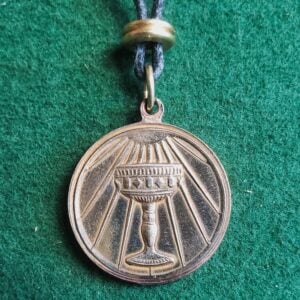
In Christian tradition, the Holy Grail is believed to be the cup from which Jesus drank at the Last Supper and the vessel that caught his blood during the crucifixion. This sacred chalice was said to have extraordinary healing powers, capable of curing all wounds, restoring youth, and providing spiritual nourishment to those pure enough to approach it.
Legend says that Joseph of Arimathea, the wealthy disciple who provided Christ’s tomb, brought this sacred relic to Britain in the early days of Christianity. There, hidden from a world not yet prepared for its truths, the Grail became the ultimate symbol of spiritual pursuit—a representation of divine grace that can only be reached through perfect purity of heart and steadfast faith.
Long before Christian missionaries delivered news of Christ’s chalice to Celtic lands, the people of Britain, Ireland, and Gaul revered sacred vessels believed to have miraculous powers of healing, renewal, and transformation. These were the cauldrons of Celtic goddess tradition—magical containers that could bring the dead back to life, supply endless feasts, and grant wisdom to those brave enough to drink from them.
The most renowned was the Cauldron of Cerridwen, the Celtic goddess of wisdom, transformation, and rebirth. This mythic vessel brewed the elixir of knowledge and inspiration, requiring a year and a day of careful tending to produce just three drops of precious liquid that could grant omniscience to anyone who consumed them.
These ancient cauldrons held more than just magical significance—they represented the feminine principle of creation, a womb-like vessel from which all life begins and to which it ultimately returns. In Celtic belief, these sacred containers symbolized the Great Goddess herself, signifying her power to generate life, death, and rebirth in infinite cycles.
The link between the Grail and ancient goddess worship becomes clear when exploring the symbol’s deeper ties to feminine creative power. The chalice has long been one of humanity’s most powerful symbols of the sacred feminine—its receptive, enclosing nature representing the womb, the earth, and the nurturing aspect of divinity.
In pre-Christian European traditions, sacred vessels were seen as symbols of the goddess’s life-giving power. Just as the physical womb holds and nurtures new life, these spiritual containers carried the potential for spiritual rebirth and transformation. The blood they contained wasn’t considered lost or sacrificed, but as life force itself—the sacred essence flowing through all creation.
This insight adds significant depth to the Christian Grail legend. When medieval storytellers described the Grail holding Christ’s blood, they unknowingly linked their new religion to much older traditions that saw divine blood as the source of life, fertility, and spiritual strength.
One of the most fascinating parts of Grail mythology is its link to the ancient Celtic idea of the sacred king, whose health directly influenced the land’s fertility. In older traditions, the king was literally married to the land’s goddess, and their union guaranteed ongoing abundance of crops, herds, and human communities.
Grail legends echo this through the Fisher King—the wounded ruler whose injury makes his kingdom a wasteland. Only healing the king with the Grail’s power can bring fertility back to the land. This shows the symbol’s roots in agricultural fertility cults, where sacred vessels played key roles in rituals that ensured successful harvests and the continuation of life.
Arthurian legends transformed ancient Celtic cauldron myths into Christian allegories of spiritual seeking and moral purification. Knights of the Round Table embarked on quests to find the lost Grail, each journey representing different approaches to spiritual growth.
Sir Galahad, the virginal knight of perfect purity, succeeded in achieving the Grail vision through complete spiritual innocence and unwavering faith. Sir Percival either attained the Grail or came close through his mix of innocence and growing wisdom. Sir Lancelot, despite being the greatest knight in martial skill, failed because of his adulterous love for Queen Guinevere, showing that earthly passions must be overcome for ultimate spiritual achievement.
Perhaps nowhere is the complex history of the Grail symbol more clear than at Glastonbury, the legendary Isle of Avalon where many spiritual traditions come together. This ancient sacred site has been revered for thousands of years, serving different religious communities while keeping its core meaning as a place where the divine breaks into everyday life.
The Chalice Well at Glastonbury symbolizes a perfect blend of Christian and pagan traditions. This natural spring has been regarded as sacred since prehistoric times, originally dedicated to Brigid, the Celtic goddess of healing, poetry, and smithcraft, for whom Britain might have been named. According to legend, this same well became the hiding place of the Holy Grail, brought to Britain by Joseph of Arimathea.
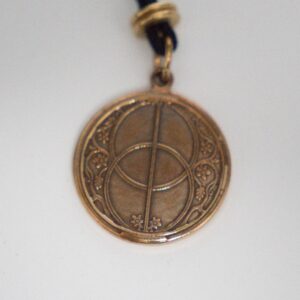
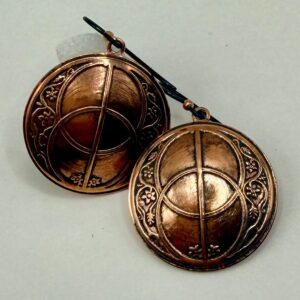
The wrought iron cover of the Chalice Well displays the Vesica Piscis—two overlapping circles whose intersection forms an almond or fish-like shape. This ancient symbol holds multiple layers of meaning that perfectly embody the Grail’s role as a bridge between spiritual traditions.
In Christian interpretation, the fish shape recalls the early Christian ichthys symbol. In goddess tradition, the almond shape resembles the vulva, making it a powerful symbol of feminine creative power. More broadly, the Vesica Piscis represents the intersection of any two spheres of existence—matter and spirit, masculine and feminine, known and unknown.
In modern spirituality, the Grail remains a powerful symbol of the search for meaning, healing, and divine connection. Jungian psychology views it as a symbol of the integrated Self. Feminist spirituality reclaims its pre-Christian roots connected to goddess worship. Environmental movements see it as representing earth’s healing, which is closely linked to human spiritual growth.
The most important truth about the Holy Grail is that it represents something that cannot be possessed in the normal way. Legends say the Grail appears only to those who have prepared themselves through spiritual discipline, moral purification, and genuine service to others. It cannot be taken by force, bought with wealth, or achieved through worldly success.
Today, the Holy Grail continues inspiring artists, writers, spiritual seekers, and everyday people who feel that this ancient symbol holds something vital about the human condition and our connection with the divine. Whether seen as a Christian relic, a pagan goddess symbol, or a universal archetype, the Grail reminds us that the sacred is always present and accessible to those who approach it with proper understanding.
The chalice teaches us that we can become vessels for divine grace, transforming our hearts and minds into containers worthy of sacred presence. The quest for the Grail shifts from seeking an external object to a journey of becoming the kind of person—pure, compassionate, committed to truth—who can recognize and accept the sacred gifts always offered.