
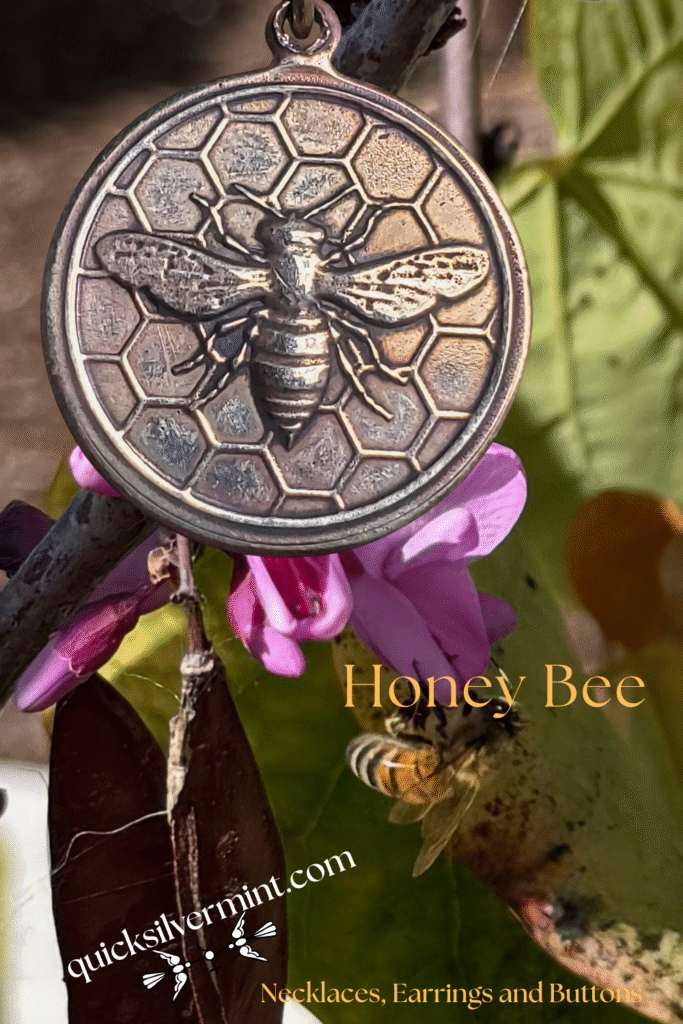
Throughout human history, few creatures have captured the imagination and reverence of civilizations quite like the humble bee. These extraordinary insects, with their intricate social systems, tireless work ethic, and crucial role in sustaining life through pollination, have become powerful symbols in many cultures, religions, and philosophical traditions. To understand the deep symbolic meaning of the bee, we must look not only at their behavior but at their entire way of life—their highly organized communities, complex hierarchies, and the vital work they do to maintain the natural world.
The symbolic power of bees comes from their remarkable social structure and steadfast dedication to the group. Unlike solitary animals, bees live in highly complex communities where each member has a specific role, and the survival of the entire colony depends on everyone’s contribution. This natural teamwork has made bees ideal metaphors for human society, spiritual communities, and the concept of harmonious cooperation.
Observing a beehive demonstrates nature’s expertise in organization, communication, and shared purpose. Worker bees go out to gather nectar and pollen, share the location of resources through complex dances, and return to contribute their findings to the collective hive. Guard bees defend the hive from dangers, nurse bees care for the young, and the queen bee ensures the colony’s continuation. This smooth coordination of individual efforts for the collective good has inspired many human societies to understand how communities can operate most effectively.
The bee’s symbolic importance goes beyond just social order to include ideas of industry, purpose, and turning raw materials into something valuable and life-giving. The way bees turn flower nectar into honey—that golden substance that won’t spoil and offers concentrated nourishment—has been seen throughout cultures as a metaphor for spiritual growth and the alchemical process of transforming basic experience into wisdom.
In ancient Egypt, bees held a special place of reverence, closely linked to divine power and royal authority. According to Egyptian mythology, bees were created from the tears of Ra, the mighty sun god whose daily journey across the sky brought light and life to the world. This divine origin lifted bees beyond simple insects to sacred beings embodying solar divinity.
The connection between bees and Egyptian royalty was so strong that the ruler of Lower Egypt was called “he who belongs to the bee.” The bee hieroglyph became a key part of royal titles and ceremonies, symbolizing not just earthly power but divine authority. Egyptian kings saw their role as similar to that of the queen bee—central figures whose wise leadership guaranteed the prosperity and harmony of their people.
Egyptian tomb paintings and artifacts often depict bee symbols, especially in scenes related to the afterlife and divine judgment. The Egyptians believed that, just as bees construct perfect hexagonal cells in their honeycombs, the divine order forms perfect structures in the universe. This geometric precision, along with honey’s preservative qualities, made bees powerful symbols of eternal life and divine harmony.
Among the Essenes, the Jewish ascetic community best known for preserving the Dead Sea Scrolls, bees served as a fitting metaphor for spiritual dedication and community service. Essene priests were called “bees” in recognition of their relentless devotion to safeguarding spiritual wisdom within their desert communities.
Like worker bees collecting nectar from different flowers to produce honey for the hive’s benefit, Essene priests gathered spiritual insights from various sources—Hebrew scriptures, mystical experiences, and contemplative practices—to build a repository of wisdom that would nourish their community and preserve sacred knowledge for future generations. Their label as “bees” recognized their essential role in supporting the spiritual life of the community through continuous, selfless service.
The Essene view of bee symbolism highlighted the value of individual spiritual efforts enhancing collective enlightenment. Just as each bee’s role was crucial to the hive’s life, each priest’s commitment to study, prayer, and community service was essential to uphold their spiritual tradition during challenging times in Jewish history.
During the Renaissance, artists and philosophers saw bees as a perfect symbol for exploring the complex nature of love, desire, and passion. Renaissance paintings often showed Cupid, the Roman god of love, being stung by bees while trying to steal honey—a strong allegory for love’s dual nature as both a sweet reward and a potential source of pain.
These artistic representations conveyed deep philosophical messages about the nature of romantic attraction and desire. Cupid’s ignorance of the danger posed by protective bees while reaching for honey symbolized how love can make people blind to consequences, prompting them to chase pleasure without considering potential pain or harm. The bee’s sting symbolized the unavoidable suffering often linked to passionate love—jealousy, heartbreak, betrayal, and the pain of loss.
The Renaissance lesson woven into these artistic depictions was clear: “Beware of love’s sting.” Just as honey is protected by bees willing to risk their lives to defend their treasure, the sweetest rewards in love often involve risks and call for wisdom, patience, and respect rather than impulsive actions. The bee thus became a symbol for approaching desire with awareness and understanding instead of reckless passion.
Throughout history, political theorists and philosophers have looked to bee colonies as models for ideal human societies. From ancient times through the modern era, thinkers including Aristotle, Plato, Virgil, Shakespeare, Marx, and Tolstoy have used bee communities to explore questions about governance, social organization, and the relationship between individual freedom and collective responsibility.
Aristotle observed that bee societies demonstrated natural hierarchy without oppression, purposeful work without coercion, and collective decision-making that served the common good. Plato saw in beehives evidence that specialized roles and cooperative effort could create harmonious societies where everyone contributed according to their abilities and received according to their needs.
These philosophical observations about bee society influenced political thought for centuries, contributing to discussions about democracy, socialism, and various forms of cooperative governance. The bee’s example suggested that highly organized, productive societies could exist without the conflicts and inequalities that burden human communities.
In Greek and Roman religious traditions, bees held sacred as messengers between humans and the divine. The god Dionysus, associated with wine, ecstasy, and spiritual transformation, was linked to bees through complex mythological stories that connected honey, intoxication, and spiritual experience.
Greek and Roman cultures drank mead—a fermented honey wine—as their preferred beverage for religious ceremonies and celebrations. This honey wine, often mixed with grapes to create what could be seen as an early version of modern payment wines, was believed to help communicate with the gods and cause prophetic visions.
Pan, the Greek god of wild nature and sexuality, was also honored as the divine protector of beekeeping, linking bee symbolism to themes of fertility, natural abundance, and the sacred aspects of sexuality and reproduction. This connection highlighted bees’ role in pollination and their crucial contribution to the fertility and survival of plant life.
Perhaps nowhere was the sacred significance of bees more apparent than at Delphi, Greece’s most important oracular site. According to tradition, the temple itself was built by bees, and the sacred oracle chamber featured an Omphalos—a carved stone shaped like a beehive and covered with detailed bee imagery arranged in beautiful, meaningful patterns.
Pythia, the chief priestess who delivered Apollo’s prophecies at Delphi, was known as “The Delphic Bee,” while other priestesses throughout Greece were called “Queen Bees.” These titles reflected the belief that priestesses, like worker bees, gathered divine wisdom from ethereal sources and turned it into nourishment for their communities.
Greek religious practices involved priestesses entering trance states facilitated by honey consumption, recognizing that this sweet substance could open pathways to divine communication and prophetic insight. The link between bees, honey, and spiritual revelation made these insects essential participants in ancient Greece’s most significant religious and oracular traditions.
Today, bee symbolism remains influential as humanity faces environmental threats that endanger bee populations worldwide. The phrase “busy as a bee” has become a symbol of productivity and dedication, while environmental movements have embraced bees as icons of ecological interconnectedness and the need to protect biodiversity.
Contemporary spiritual movements often use bee symbolism to symbolize community cooperation, the significance of individual effort for collective well-being, and transforming life experiences into wisdom. The bee reminds us that even the smallest individuals can contribute to something great when working together with purpose and dedication.
From ancient Egyptian pharaohs to modern environmental activists, the bee has consistently taught humanity about the power of cooperation, the importance of purposeful work, and the sacredness of community. These remarkable creatures continue to show that individual effort, when aligned with collective purpose, can produce abundance, beauty, and sustainability that benefit all life.
Observing bees teaches us that genuine productivity comes from cooperation, that personal fulfillment arises through serving something greater than ourselves, and that the sweetest rewards in life often require patience, wisdom, and teamwork to attain and safeguard.