
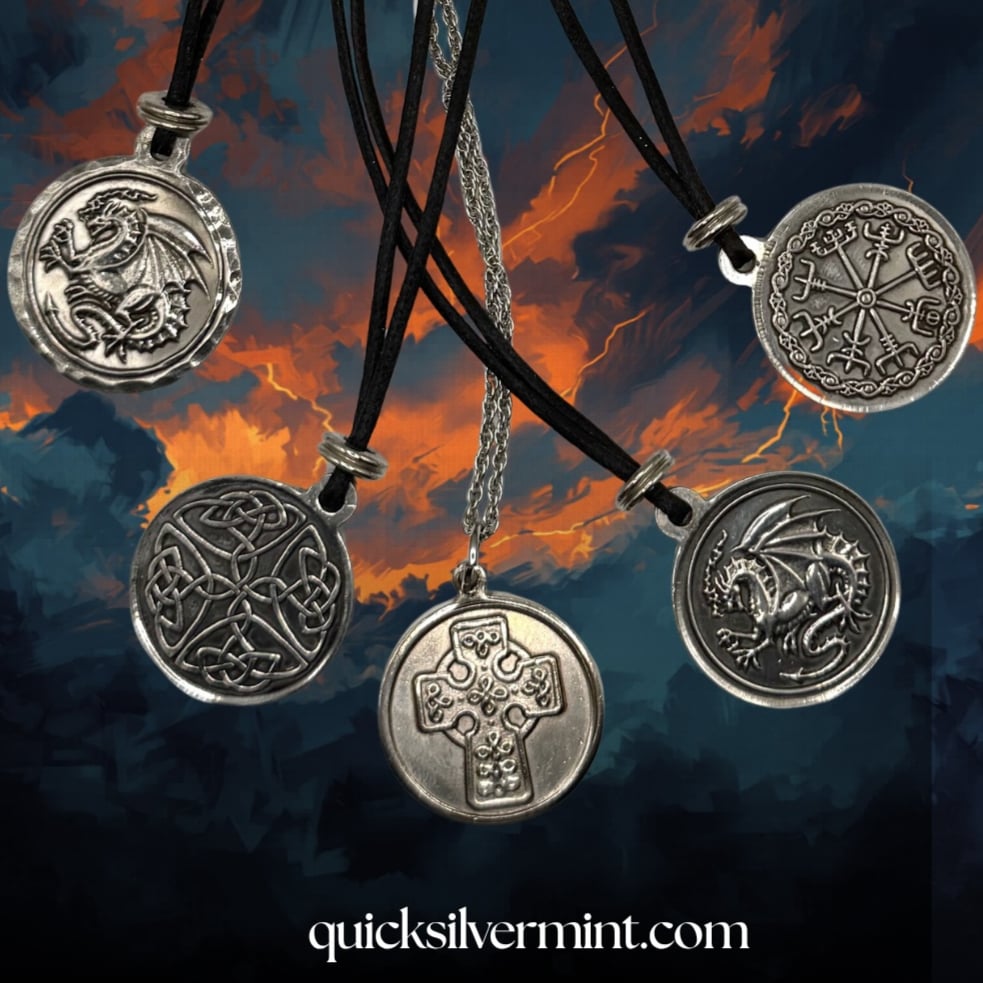
Years ago, we carried pewter in the shop.
Then we stepped away. We had supply issues, and silver was the area we wanted to focus on. We still carry silver, and we stick to fine silver just like we do with our gold. That matters to us. We like knowing exactly what we are working with, and we like offering metals that feel true to the history of minting.
But we feel the economy too.
Silver prices have shifted a lot over the last year, and for a small shop, that affects everything. Every blank costs more. Every new design costs more to test. Every piece carries more risk before it ever reaches a table or a customer’s hand.
We are not moving away from silver. Silver is still very much part of Quicksilver Mint.
But we wanted to bring back something that gives us more to offer.
That is where pewter comes in.
We found a lead-free pewter source here in California, and this material is working well for us. The pewter is 92% tin, 7.5% antimony, and 0.5% copper. The blanks are made in Northern California by a small family business that cuts, deburr, tumbles, and ships them out quickly.
Pewter is not silver, and I do not want to pretend it is. It has a different feel, a different softness, and a different place in the shop.
But this pewter mints really well.
Because it is a softer metal, detail comes through beautifully. It takes an impression cleanly, and it looks especially good with hammered edges. The hammered finish gives it an old-world quality, less polished, more handmade and historic.
Pewter does need a little more care. Because it is softer, I would not recommend wearing it where it will constantly rub against zippers, keys, or harder metal edges. It is better suited as a keepsake, charm, pendant, or token than something that gets knocked around daily.
Historically, pewter has been used for practical and decorative objects for centuries: buttons, tokens, dishes, charms, small keepsakes. It has always had a place in everyday history. Not the fanciest metal in the room, but useful, workable, and accessible.
That feels like the right reason to bring it back now.
Fine silver and gold are still part of what we do. They are not going anywhere. But pewter gives us another way to make pieces that are handcrafted, historic, and a little easier on the budget.
Pewter is back. Not as a replacement for silver, just another chapter in the shop.
A note on sources: The pewter history and lead timeline in this post draws from Hampshire Pewter, Buckingham Pewter, Oak & Forge, and History Myths Debunked. Silver market figures come from APMEX, JM Bullion, and Yahoo Finance. I did my own research before bringing pewter back into the shop, and I wanted to share where that information came from.