
Cord was never a concern for years. My dad had over 5,000 yards from a distributor who got exactly what fair jewelry needed: strong cord for real wear. We thought it would always be there — dependable and familiar.
Then Covid arrived, and like many small craft businesses, we closed our doors for a time. When fairs reopened, our customers returned, supporting our team and us. That season showed us the importance of community in our craft. We went through a lot of cord that year.
And when it came time to reorder… our supplier was gone.
Our longtime supplier vanished. Across the country, booths scrambled to find other options, adapting to keep work moving. When our own supply finally ran out, I went on a mission to test cords. Some experiments didn’t last long.
Leather looked beautiful but didn’t hold up to ocean air and daily wear; after a few surf days, it picked up that unmistakable “wet dog” smell. One waxed cord seemed promising until the summer heat transferred wax to my linen shirt at a July fair. Not exactly the durability we were looking for.
Eventually, I found a waxed linen that feels strong, natural, and honest. It isn’t identical to the cord we used before: truthfully, that perfect product seems to have disappeared from the world — but it’s the closest balance we’ve found.
At the same time, something else shifted. A couple of customers each year began asking us directly for cords. The silver and bronze medallions are built to last generations, but because cords live very different lives. Around the fairse, we joke that people don’t just wear their medallions… they live in them. They bathe in them. They surf, hike, and sleep in them.
And cords aren’t meant to last forever.
So instead of pretending they should, we now offer replacement cords directly. You can purchase two replacement cords for $6. This service is not a profit center, but a practical way to help you keep wearing the pieces you love. If you want new cords, just let us know, and we’ll make it easy to get them. Every booth has had to make different material choices since supply chains shifted, and there’s no judgment in that. We’re all adapting in our own way.
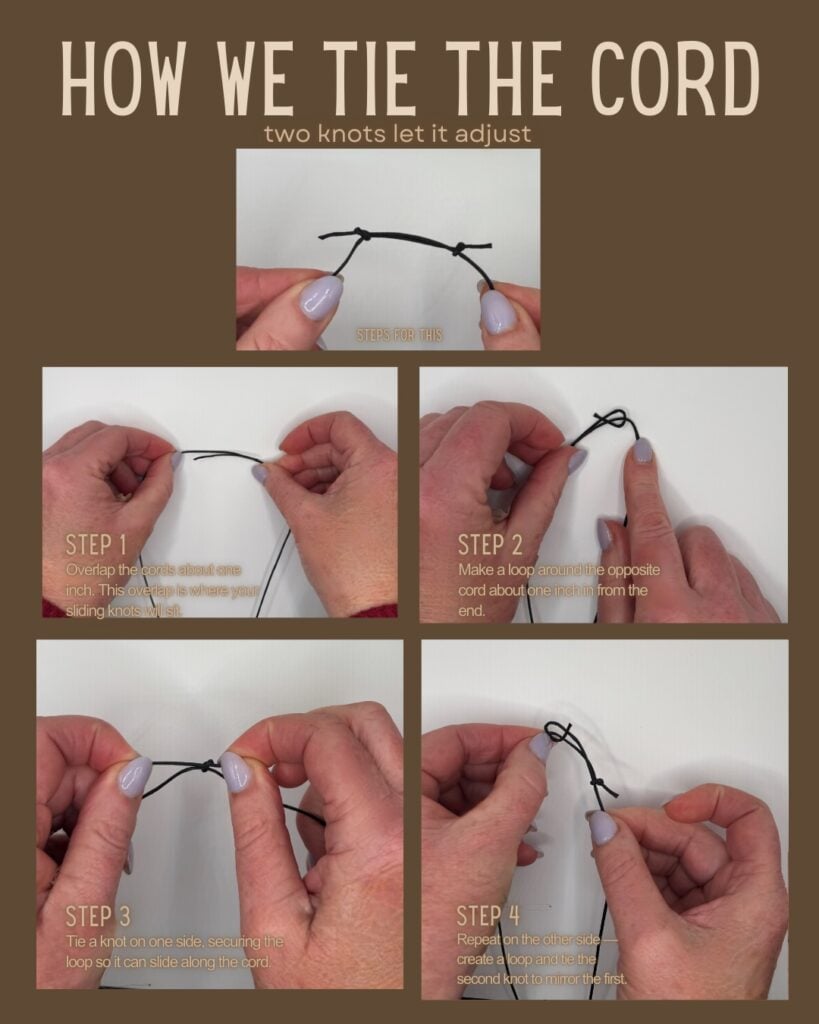
When your cords arrive, they will measure about 30 inches long, intentionally left generous so you can tie them to adjust to your preferred length. We’ve included simple knot instructions because part of this process is meant to stay hands-on — a small moment of craft that connects you to the piece itself.
Silver can last for generations. Cords live closer to the present. They soften, wear, and eventually ask to be replaced: not as a flaw, but as proof that the jewelry has been part of real life.
And honestly, that’s exactly how we think it should be.