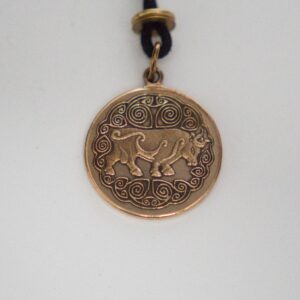
In Celtic tradition, the bull is a powerful emblem of strength, virility, and abundance. Its robust and enduring nature made it a central figure in Celtic mythology, often representing physical power, determination, and courage. The bull’s association with fertility reflects its vital role in agricultural societies, where it symbolized the sustenance of life, prosperity, and the generative forces of the earth. By embodying both physical prowess and life-giving energy, the bull became a symbol of vitality and the cyclical nature of life.
Celtic myths often feature bulls as sacred or magical creatures, associating them with leadership, protection, and spiritual authority. The bull’s dominance in the natural world made it a metaphor for personal power, resilience, and assertiveness, traits admired in warriors and community leaders alike. Bulls were also connected to sacred rituals, where their presence represented both earthly strength and divine blessing.
Spiritually, the bull encourages grounding, patience, and determination. It reminds humans of the importance of harnessing inner strength while respecting natural forces. The bull symbolizes courage, prosperity, and the harmony between physical might and spiritual vitality, serving as a timeless emblem of endurance, fertility, and the sustaining power of life itself.