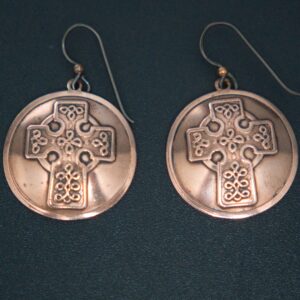
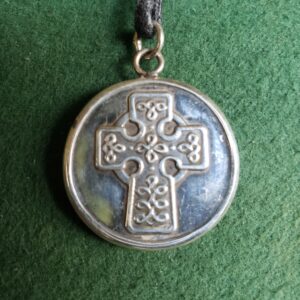
The Celtic Cross is one of the most recognizable symbols of Celtic culture, combining a traditional Christian cross with a circle surrounding the intersection. This fusion reflects both spiritual faith and the integration of pre-Christian Celtic symbolism, making it a powerful emblem of continuity, balance, and eternity. The circle is often interpreted as a symbol of unity, wholeness, and the cyclical nature of life, suggesting an eternal connection between the earthly and spiritual realms.
In Celtic Christian tradition, the cross represents faith, sacrifice, and divine protection, serving as a reminder of spiritual guidance and moral strength. The intricate knotwork and interlacing patterns often found on Celtic Crosses carry additional meaning, symbolizing the interconnectedness of life, the infinite flow of time, and the enduring nature of the soul. These designs reflect the belief that all things—spiritual, physical, and natural—are interwoven in a continuous cycle.
Beyond its religious significance, the Celtic Cross has cultural importance as a marker of heritage, identity, and resilience. It often stands as a memorial or a symbol of community, linking past, present, and future generations. Overall, the Celtic Cross embodies faith, eternity, and the profound harmony between the spiritual and natural worlds, making it a timeless emblem of connection, balance, and enduring strength.