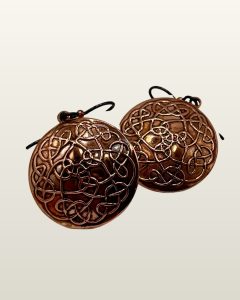
While Celtic knots were being created in pre-Christian times, these intricate designs gained recognition through their use in early Christian art—especially in illuminated manuscripts, such as the eighth-century Book of Kells. The endless, looping patterns were seen as metaphors for eternity, unity, and the interconnectedness of all creation. Though little is known about their origins before the Christian influence around 450 AD, these knots likely carried spiritual meaning for the ancient Celts, who believed that all life was woven together in an infinite pattern. The Celts used interlacing forms to symbolize cycles of life, death, and rebirth—concepts that later aligned naturally with Christian beliefs about eternal life. Today, Celtic knots are admired not only for their beauty but also for the mystery they embody: a timeless emblem that links the ancient world’s spirituality with enduring expressions of faith, artistry, and human connection.