Quick Silver Mint

Anchor

Ancient

Anchors hold historic and cultural significance that spans centuries and civilizations. Originally developed as a practical tool to stabilize ships, anchors quickly became symbols of safety, hope, and steadfastness. In ancient times, early mariners used large stones or weighted devices to secure their vessels. As seafaring grew more advanced, anchors evolved into the iron and … Read more

Ankh

Ancient

The ankh is one of the most iconic symbols of ancient Egypt, renowned for its historic and cultural significance. Often depicted as a cross with a loop at the top, the ankh represented life, immortality, and the union of earthly and divine forces. Pharaohs, gods, and goddesses were frequently shown holding the ankh, emphasizing its … Read more

Caduceus

Ancient

The caduceus, a staff entwined by two serpents and often topped with wings, is a symbol rich with historical and cultural significance. Originating in ancient Greece, it is associated with Hermes, the messenger of the gods, who guided souls, facilitated communication, and protected travelers. In this context, the caduceus symbolizes negotiation, balance, and the duality … Read more

Claddagh

Ancient

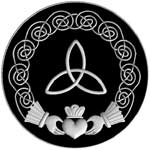
The Claddagh, a timeless symbol originating from the Irish fishing village of Claddagh, embodies love, loyalty, and friendship. Its design features two hands holding a heart topped by a crown, conveying deep emotional connections. Traditionally given as a ring to express devotion among romantic partners, family, and friends, the Claddagh has evolved into a meaningful … Read more

Death’s Head

Ancient

The Death’s Head, often shown as a skull, is one of humanity’s oldest symbols — a reminder of life’s fragile balance between the physical and the eternal. Worn in silver, it represents both mortality and the unending cycle of renewal. In medieval and Renaissance art, it was a memento mori — “remember you must die” … Read more

Eye of Horus (Left)

Ancient

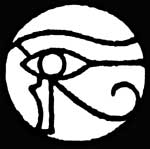
The Eye of Horus, also known as the Wedjat or Udjat-eye, originates from a myth in which the sky-god Horus loses one of His Eyes during his struggle with the god Set, and the deity Thoth restores it, thereby restoring wholeness and harmony. Because of this mythic origin, the symbol embodies protection, healing, restoration, and an … Read more

Eye of Ra (Right)

Ancient

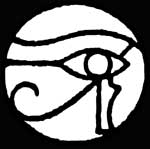
In ancient Egyptian belief, the Eye of Ra symbolizes the fierce, sovereign gaze of the sun god Ra, embodying divine power, authority, and protective judgment. Often depicted as a powerful goddess such as Sekhmet or Hathor, the Eye acts as Ra’s messenger against chaos (Isfet), fiercely guarding cosmic order (Maat) with its radiant energy.  Beyond … Read more

Goddess

Ancient

Our Goddess stands with her arms raised, embracing the moon and its phases. This symbol embodies the ancient rhythm of creation, transition, and renewal, representing the Maiden, Mother, and Crone, as well as the waxing, full, and waning moons, and the cycles of birth, growth, and release. With her arms lifted, she opens the skies … Read more

Hand of Fatima

Ancient

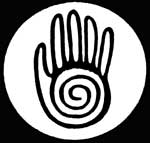
The Hamsa, also known as the Hand of Fatima in Arabic, is a palm-shaped symbol that represents protection, strength, and blessings. Originating from Middle Eastern and North African cultures, it is linked to the five fingers (khamsa). Many believe that the Hamsa can ward off the “evil eye,” attract good luck, and protect both the … Read more

Harp

Ancient

In Ireland and Scotland, the harp stands as a gentle yet powerful symbol of heritage, music, and identity. In Ireland, it has become a national emblem; every official seal, government document, and euro coin features a stylized harp that connects to its Gaelic roots. Traditionally, the harp was played by bards and wandering musicians—storytellers who … Read more

I-Ching (Yin & Yang)

Ancient

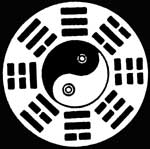
The I Ching, also called the “Book of Changes,” is one of the most enduring systems of divination and philosophy from the ancient world. Combining Taoist and Confucian views, it teaches that the universe is in a state of constant flux. Its structure comprises eight trigrams and sixty-four hexagrams, composed of broken and unbroken lines … Read more

Jolly Roger

Ancient

The Jolly Roger, featuring its iconic skull and crossbones, has gone beyond its pirate roots to become a symbol of defiance and the certainty of death. Its name might originate from the French phrase joli rouge, meaning “pretty red,” which referred to the blood-red flags flown by early privateers. Before pirates used this symbol, similar … Read more

Knights Templar

Ancient

Founded in the early twelfth century, the Knights Templar were warrior monks who took vows of poverty, chastity, and obedience while protecting pilgrims traveling to the Holy Land. Their order grew into one of the most powerful institutions of the Middle Ages—wealthy, disciplined, and shrouded in mystery. Legends suggest that the Templars guarded sacred relics, … Read more

Labyrinth

Ancient

Unlike a maze, which confuses, a labyrinth follows a single winding path to the center and back again. Found in ancient Crete, carved into medieval cathedral floors, and used by cultures worldwide, it serves as a metaphor for the soul’s journey. The walker moves inward toward reflection, release, and understanding, then outward again, renewed. In … Read more

Laurel Wreath

Ancient

The laurel wreath, made from the leaves of the sacred bay tree, has long symbolized victory, enlightenment, and lasting honor. In ancient Greece, the winners of the Olympic Games wore laurel crowns, representing the balance between physical strength and divine inspiration. Roman generals later adopted it as a symbol of glory, while poets came to … Read more

Lightning

Ancient

Lightning has long been seen as a spark of divine inspiration, a sudden flash that connects heaven and earth. In many mythologies, it serves as a weapon for gods, such as Zeus in Greek mythology, Thor in Norse mythology, and Indra in Indian mythology. Each lightning bolt symbolizes a release of power from above, capable … Read more

Maltese Cross

Ancient

The Maltese Cross is a timeless symbol of courage, service, and devotion to others. Its eight-pointed shape dates back to the Knights Hospitaller, later known as the Knights of Malta, who wore it as a sign of their mission to protect and care for the sick and the poor. Each of the eight points stands … Read more

Om

Ancient

Om is a sacred sound (called the supreme syllable) and spiritual symbol in Hinduism, Buddhism, and other traditions, representing the essence of the universe. It signifies creation, preservation, and destruction—the cycle of life. Chanting “Om” fosters inner peace and a connection to the divine, symbolizing ultimate reality, consciousness, and the unity of all existence.

Pentacle

Ancient

The pentacle, a five-pointed star enclosed in a circle, symbolizes protection, balance, and the harmony of the elements—earth, air, fire, water, and spirit. It is associated with the pursuit of inner wisdom and unity with nature. Alchemists used it as a symbol of the cosmos, with the figure of a man placed within a circle. … Read more

Sorcerer of Les Trois Freres

Ancient

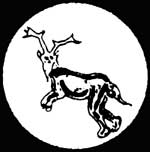
Paleolithic humans were utterly dependent on the animals they hunted. He regarded them as similar to himself, but endowed with supernatural powers. Early hunters believed that the God of the animals they hunted must be sacrificed to and honored. Such may have been the purpose of the Sorcerer figure found on the walls of an … Read more

Spirit Ship

Ancient

The spirit ship is a powerful symbol of Viking culture. Historically, these vessels represented the journey through life and into the afterlife, and were often used in burials. They also embody exploration, courage, and connection between worlds. The ship signifies the Viking spirit of adventure and the profound role of the sea in their destiny.

Sri Yantra

Ancient

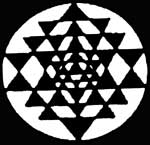
The Sri Yantra symbolizes spiritual harmony, balance, and cosmic unity. The interlocking triangles represent the union of masculine and feminine energies. In Hindu and Buddhist meditation, it guides seekers toward enlightenment and inner peace, embodying the universe’s divine structure and the journey toward self-realization and ultimate truth.

Sword Dancing

Ancient

This dance form is distinctive for its fast, elegant weaving figures, where dancers pass over and under the swords while remaining linked. At times, the swords are interlinked into a woven knot, known as a lock or nut, which is strong enough to be held up by one of the dancers, then returned to all … Read more

Templar Cross

Ancient

The Templar Cross is one of the most iconic symbols of faith, courage, and service. Originating with the Knights Templar, a medieval order of monk-warriors known as the Poor Fellow-Soldiers of Christ and of the Temple of Solomon, this cross represented a strong commitment to devotion, humility, and the protection of travelers and sacred sites. … Read more

The Norseman

Ancient

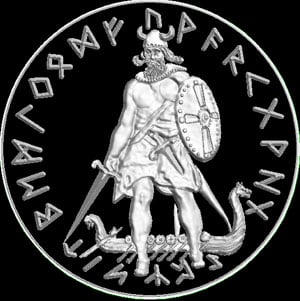
The Norseman, often referred to as a Viking, symbolizes bravery, exploration, and resilience. These seafarers from Scandinavia sailed their longships across northern waters, discovering new lands from Iceland to Byzantium, embodying a spirit of warrior strength and adventure. The Viking longship represents unity and craftsmanship — a remarkable vessel built to navigate both ocean and … Read more

Thor’s Hammer

Ancient

Thor’s Hammer, also known as Mjölnir, stands as one of the most iconic symbols in Norse mythology. Associated with Thor, the god of thunder and protector of Midgard, it embodies strength, protection, and divine authority. Ancient Norse warriors wore hammer amulets in battle, believing that this symbol would shield them from harm and inspire courage … Read more

Traveler

Ancient

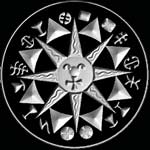
The Traveler Symbol has long symbolized safe passage and divine guidance on life’s journey. Rooted in ancient compass and star motifs, its design reflects the rose compass, the universal emblem of direction and purpose. For seafarers, nomads, and seekers alike, it is a promise that no matter how far one wanders, the spirit always finds … Read more
Triple Spiral

Ancient

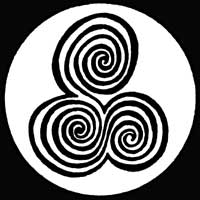
From Newgrange, Ireland, this design features the ancient Triple Spiral (Triskele). Pre-Celtic and prehistoric, it symbolizes the Triple Goddess, embodying the feminine divinity and the cycles of life, death, and rebirth. It also represents the sun’s renewal at the winter solstice, signifying profound spiritual rebirth and continuity.

Valknut

Ancient

The Valknut, a symbol of three interlocking triangles, is often associated with Norse mythology and the god Odin. It represents the cycle of life, death, and rebirth, as well as the power and mystery of the afterlife. The Valknut symbolizes the warrior spirit, divine protection, and the connection between the earthly and spiritual realms.

Vegvísir

Ancient

The Vegvísir, often referred to as the Viking compass, symbolizes guidance and protection. Rooted in Icelandic tradition, it helps the bearer find their way through rough weather or uncertain paths. More than navigation, it represents spiritual direction and inner strength, guiding individuals through life’s challenges and keeping them from becoming lost, both physically and emotionally.

Winged Scarab

Ancient

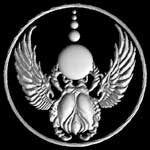
The scarab in ancient Egypt symbolized the sun’s journey and renewal of life. Carved scarabs served as magical amulets for protection, while heart scarabs with falcon wings safeguarded the heart in the afterlife. This necklace embodies the scarab’s powerful meanings of transformation and protection.

Search